
What is SEO and How Does It Work
People use search engines every day without thinking much about them. Someone searches for a nearby café. Another person looks for a marketing agency. Some people search for answers, while others search for products.
The websites that appear first usually get the most attention. This happens because search engines decide which pages deserve visibility. SEO helps websites become part of those top results.
Many website owners want to learn what is SEO and how does it work before growing online.
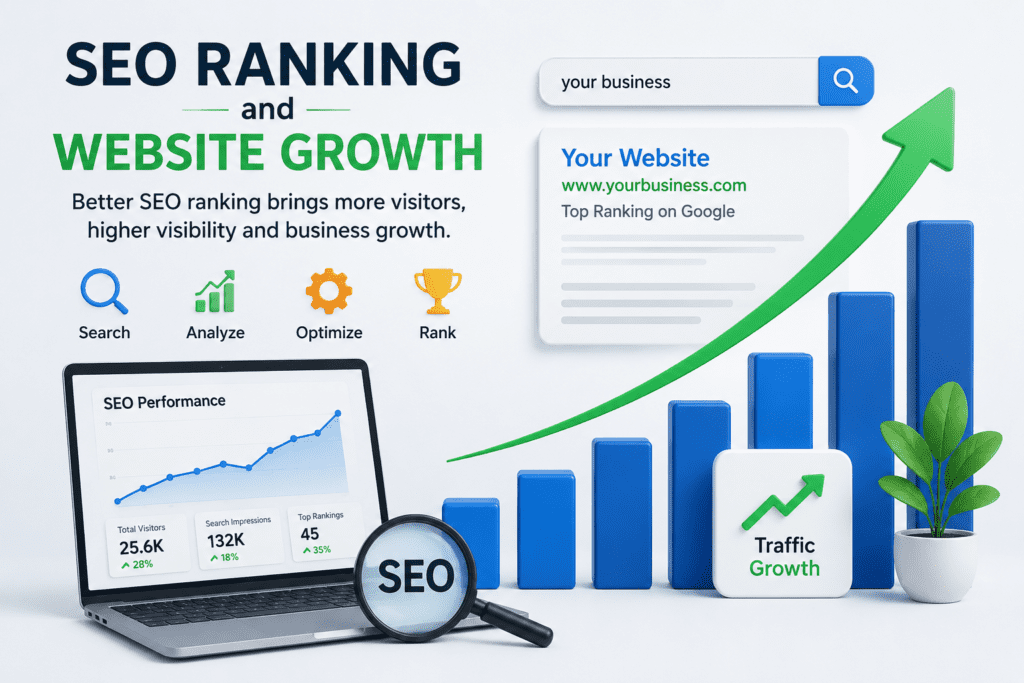
Why Understanding What is SEO and How Does It Work Matters
SEO means improving a website so search engines can understand it clearly.
Search engines want to show pages that give useful answers. If your website helps users, search engines may place it higher in results.
SEO focuses on making a website more valuable, more organized, and easier to explore.
It is not magic. It is a process of improvement.
Understanding what is SEO and how does it work helps businesses improve website visibility.
Why Websites Need SEO
Imagine opening a shop in a hidden street where nobody visits. Even if your products are good, people may never find you.
A website without SEO faces the same problem.
SEO helps people discover your website when they search online. It brings visitors who already have interest in your topic or service.
This creates better chances for traffic, inquiries, and sales.
How Search Engines Discover Websites
Search engines use automated systems to explore the internet.
These systems visit websites and collect information from pages. They read headings, links, images, and content.
After collecting information, search engines store those pages in a large database.
Later, when someone searches something, the search engine selects pages that match the search.
How SEO Helps Search Engines Understand Content
A search engine cannot understand a page like a human does.
It needs signals.
SEO gives those signals through:
- proper headings
- organized content
- keywords
- page structure
- internal links
These elements help search engines understand the topic of the page.
The Role of Keywords in SEO
Keywords are search terms people type online.
For example:
- “best laptop for students”
- “SEO services in Delhi”
- “easy pasta recipe”
Many businesses use SEO Services in Delhi to help more people find their website online.
SEO uses these terms naturally inside content.
This helps search engines connect your page with user searches.
But modern SEO does not focus only on repeating keywords. It focuses more on context and usefulness.
Why Good Content Matters in SEO
Content plays a major role in search visibility.
Search engines try to show pages that answer user questions properly.
Weak content often fails because it does not provide real value.
Useful content usually:
- explains clearly
- solves a problem
- stays easy to read
- keeps users engaged
Good content also increases trust.
Different Parts of SEO
SEO works through different areas together.
Content SEO
This part focuses on written information.
It improves:
- headings
- paragraph structure
- readability
- keyword usage
The goal is to make content clear and useful.
Technical SEO
Technical SEO improves website performance.
It focuses on:
- speed
- mobile compatibility
- page security
- website structure
A technically strong website gives a better experience.
Authority Building
Search engines also check reputation.
If trusted websites mention your website, search engines see this as a positive sign.
These mentions often come through backlinks.
Quality matters more than quantity in backlink building.
Why Website Speed Affects SEO
People dislike waiting for slow websites.
If a page loads slowly, visitors may leave before reading anything.
Search engines notice this behavior.
Fast websites usually perform better because users stay longer and interact more.
Mobile Experience and SEO
Many people browse websites through mobile phones.
A website that looks broken on mobile devices creates frustration.
Search engines prefer websites that work smoothly on phones and tablets.
This is why responsive design matters.
Internal Linking and Website Structure
Internal links connect one page of a website to another page on the same website.
These links help users continue exploring related topics.
They also help search engines understand page relationships.
For example, a blog about digital marketing can link to another page about SEO basics.
This creates better website structure.
Common SEO Problems
Some websites struggle because they follow poor practices.
Common mistakes include:
- copying content
- overusing keywords
- slow loading speed
- confusing navigation
- broken links
These issues reduce trust and affect rankings.
Does SEO Give Instant Results?
SEO usually needs patience.
Search engines do not instantly trust new websites or changes.
Results often improve slowly over time.
Consistent updates and useful content help websites grow steadily.
Why SEO Keeps Changing
Search engines update their systems regularly.
Their goal stays simple: show better results to users.
Years ago, repeating keywords worked easily. Now search engines focus more on quality and user experience.
Modern SEO rewards websites that genuinely help users.
SEO and User Experience Work Together
Good SEO is no longer only about rankings.
It is also about user satisfaction.
Visitors should:
- find information quickly
- navigate easily
- read comfortably
- trust the website
When users have a better experience, search engines notice positive signals.
Future of SEO
SEO continues to evolve with technology.
Voice search is increasing. AI tools are becoming more common. Search engines now understand language more naturally.
Websites that focus on clarity, speed, and usefulness will continue to perform well.
The future of SEO depends more on helping users than manipulating algorithms.
Beginners who want to understand search engines in more detail can read Google’s official SEO starter guide.
Final Thoughts
SEO helps websites become easier to discover online. It connects users with useful information through search engines.
Strong SEO combines quality content, clean structure, technical performance, and user experience.
It is not about shortcuts. It is about building a website that both users and search engines can trust.
Businesses and creators who focus on long-term value usually see the best SEO results over time.
Learning what is SEO and how does it work can help businesses improve their online presence.
